Intro
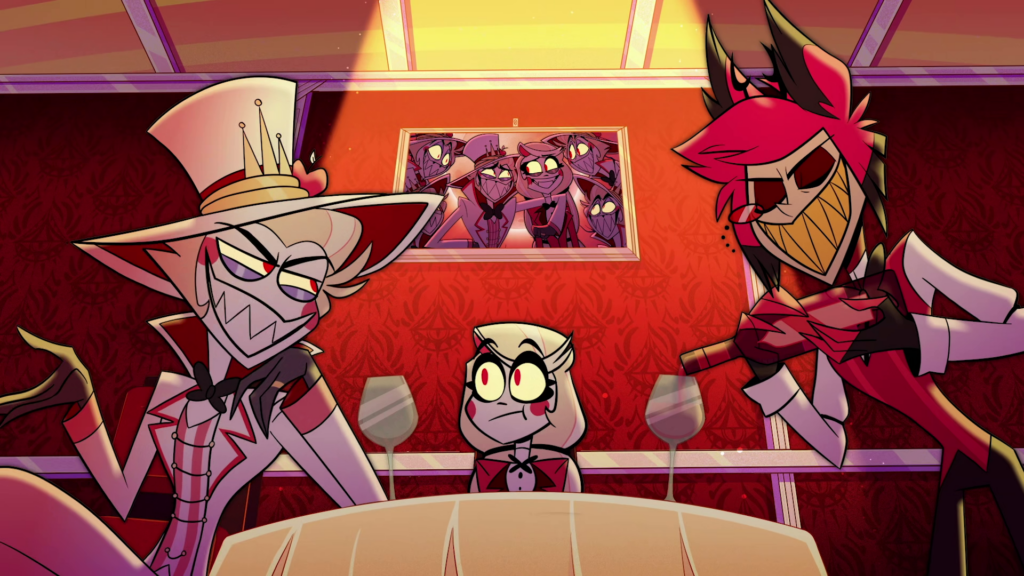
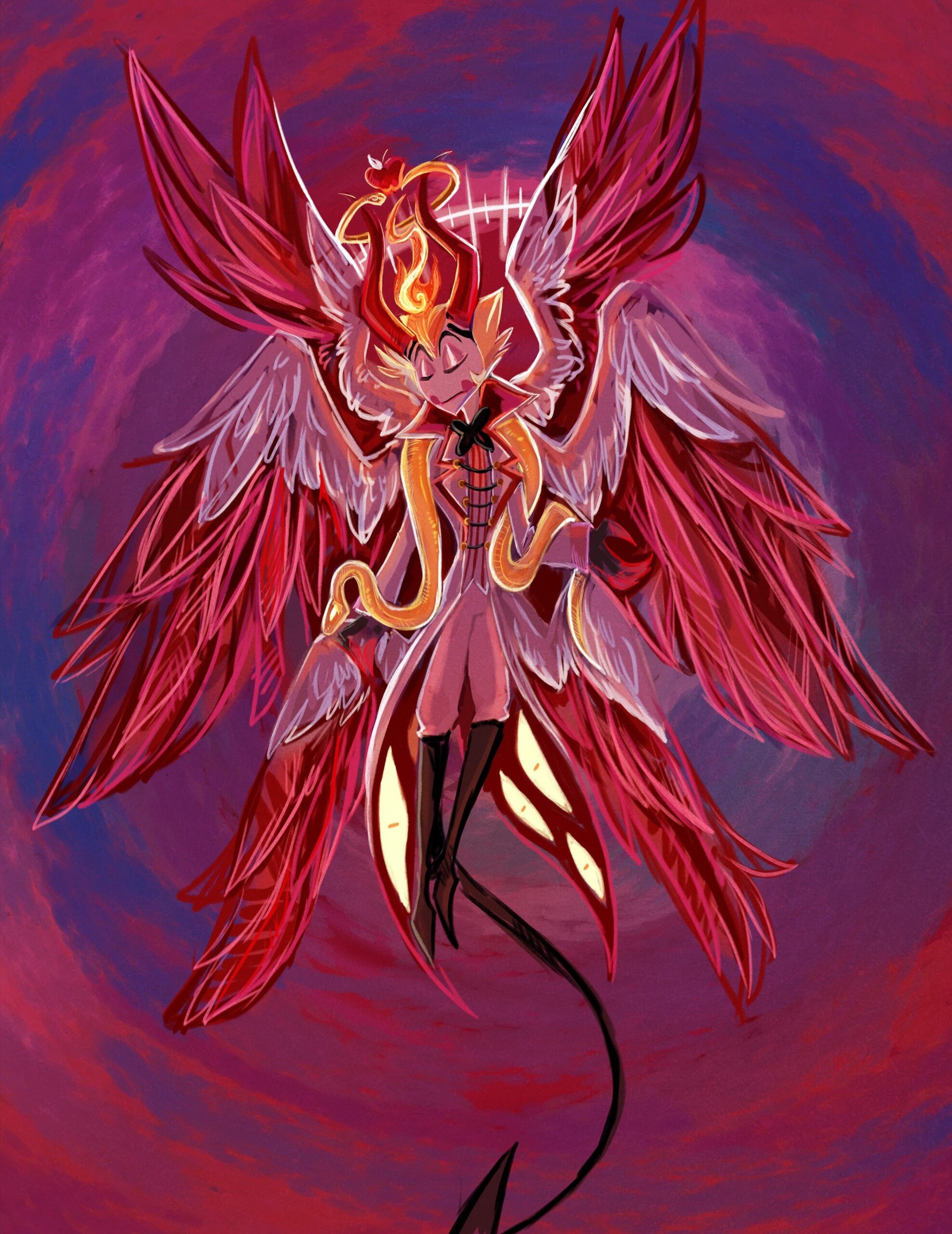
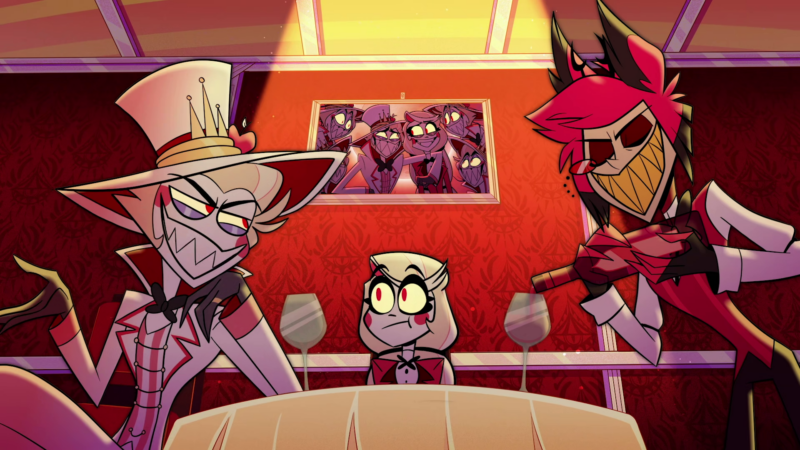
Recently, I was writing a roleplay with one of my best friends featuring their Lucifer and my Alastor, and the argument the characters got into in that thread about their respective worldviews got me really thinking. Lucifer and Alastor are genuinely two characters with sharp similarities in their origins that diverge into vastly different outcomes.
Fundamentally, both characters are incredibly proud men whose identities were firmly shaped around the concept of rejection and their efforts to cope with it. In response to his celestial rejection, Lucifer withdraws, while Alastor instead tries to ensure no one can ever ignore him or dismiss him again. They are similar in the nature of the emotional injury they bear but contrast sharply in how they respectively cope with it. In my opinion, this is a great recipe for a volatile cocktail of both compatibility and conflict. There’s no conflict quite like the conflict between two characters who think they have found the correct way to deal with a similar thing, and I realise that if both of them sat down and discussed it, it would be fascinating. It certainly was when I had the chance to write it!
Rejected by Heaven, Rejected by Earth

Lucifer, in the series’ introduction, is established as an interesting character; his first experience was being deemed too much of a troublemaker. The angels are all given their tasks (Sera, for instance, appears to be protection; Emily is fun). Lucifer was given a task and then sidelined by the others. This is a fundamental rejection of his stated and quite literal purpose. Earth is created without the input of creativity or dreams. What is he supposed to do? His purpose seems to be ideas in many regards, and what he does is have an idea.
Lilith leaves paradise because she finds being assigned a designated function and purpose reprehensible, she pushes back against the assertive control of a man, resenting it enough that she departs the garden. Lucifer finds her there and finds immediate common ground, both are capable of thinking outside the box in a way that almost seems a little unjust. Free will isn’t yet released into the world and yet both of them appear more aware of their plight. It’s unsurprising they fell in love, they dreamed enough to understand what it means to be rejected and reject unfairness in turn.
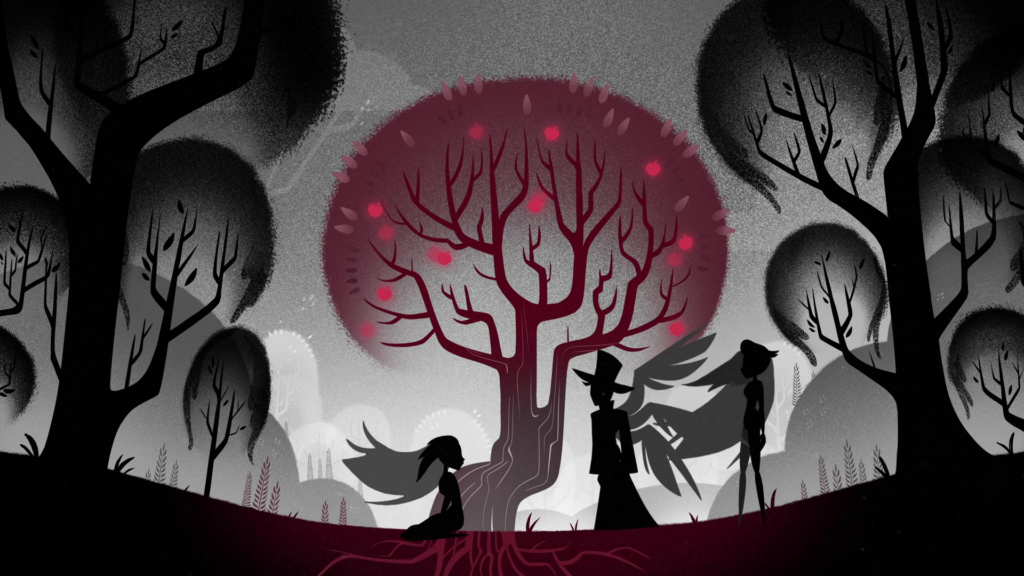
It appears that they later sought to share something of their fledgling community with Eve, who seems sad in the flashback. However, they learn that altruistic generosity and an open, welcoming community can bring unbearable repercussions. It takes confidence to open a door when you never know who will come through; kindness is dangerous. Lucifer is left isolated with only Lilith as his companion in Hell, and they are joined only by sinners. Lucifer seems to have tried to relate to them, but I don’t even blame him for failing, the trauma he had to have had from opening up was tremendous, he was probably scared of his ideas causing more strife than before. I wouldn’t be surprised if Lucifer internalized shame or guilt about what happened, questioning what his purpose truly was, if it was to create or destroy. This is mostly speculation, at time of writing, season 3 and 4 aren’t out, so we just have the introduction to guide us.
What seems to have happened in Hell is a mystery. Lilith tried to rally the Sinners, their numbers growing, but as she did, we didn’t see Lucifer at all. After his spirit was broken by Hell itself, he seems to have begun the process of receding into himself, and its uncertain how present he was at all into the modern day.
Lucifer was rejected by his peers, rejected from his purpose, exiled into a realm composed entirely of evil, which he unleashed into the realm he didn’t get to help make. We are uncertain if he was rejected by Lilith on some level (perhaps he became incredibly distant and she couldn’t cope; perhaps she was concerned with her plans; there’s no way to know), but we do know that his withdrawal and depression manifest as a feeling of distance between himself and his daughter, whom he understands less and less as time goes on.
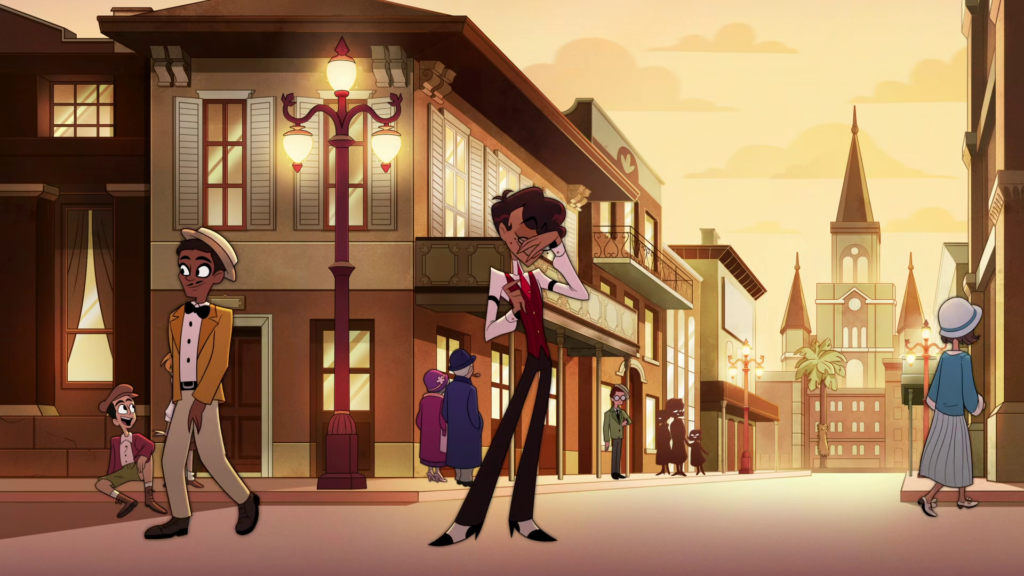
Alastor’s experience of rejection is more nuanced and complicated than Lucifer’s very personal one, at least as far as we know. Lucifer started out with incredible power and a sense of belonging within Heaven. His fall deprived him of that community, but it didn’t render him utterly powerless, he remained an immensely powerful being and became a ruler in his own right over Hell. His captive restrictions were on his ability to cause harm to those who were trapped in Hell with him, they didn’t stop him from creating or moving freely in their midst. He was able to live as he chose with his wife and daughter.
Alastor, in stark contrast, was born into a racially segregated human society with hierarchies established long, long before his birth. His rejection wasn’t a singular expulsion from a community he’d occupied as an equal. It was completely systemic, expressed through restrictions upon his very rights as a human being, limited safety, his social legitimacy and access to power. All of this was based solely on race.
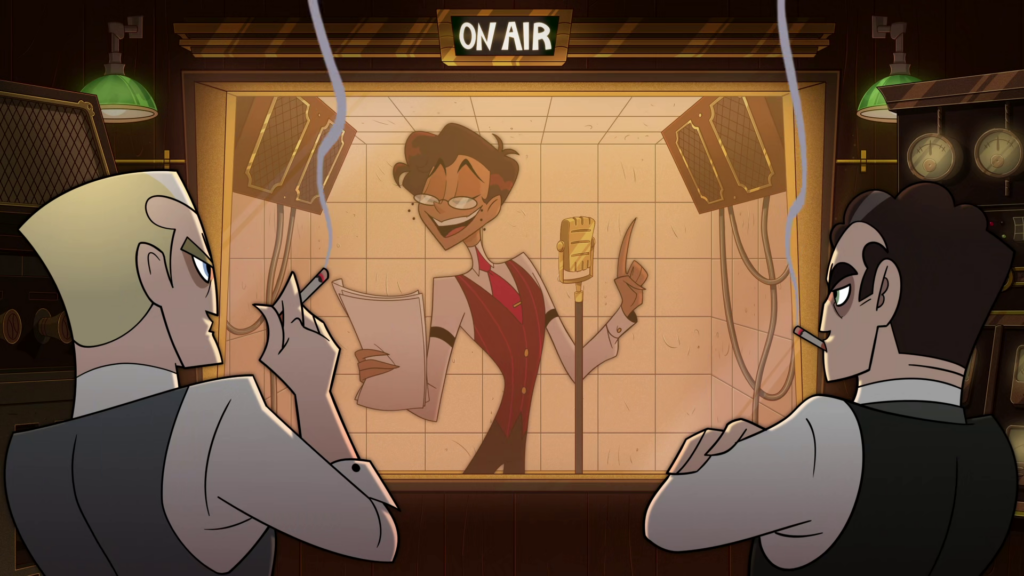
My interpretation of Alastor’s background draws very cautiously upon the complex history of Louisiana Creoles of colour. I can only stress that this wasn’t a socially or economically uniform community by any means. Some free Creoles of colour acquired property, education and professional standing within Louisiana’s colonial and pre-Civil War social order, while still being denied the civil and political rights granted to white people. After Reconstruction, the consolidation of Jim Crow imposed a far more rigid racial binary, along with more intense segregation and disenfranchisement, further undermining distinctions and forms of status that had existed within the much earlier Louisiana order. I use this history as context for a fictional interpretation rather than as a claim to represent the experiences of Creoles of colour as a whole. I only know what I have researched, and I continue to learn more every day.
Within my personal interpretation, this history provides one possible context for Alastor’s educational background, cultivated broadcasting voice and bilingualism. More significantly, the memory of conditional status followed by sharply intensified racial exclusion could contribute to his mistrust of stability and his deep resentment of established authority. Education, professional accomplishment and social polish might grant him some limited societal access and recognition, but nothing could guarantee equal treatment, personal safety or lasting power within the racial order surrounding him. There was always a ceiling on his life that really could not be negotiated with.
Despite coming across as a fairly antisocial individual, Alastor isn’t completely against community either. He enjoys communities when he personally chooses them, especially those formed by outsiders and defined by their absolute resistance to official social expectations. The speakeasy he frequented in the past was important because it represented a sliver of a broader social world that encompassed underground defiance and black-and-tan clubs operating without official permission. People could gather in these places and mingle under their own private rules. They weren’t suddenly free in those places or outside of persecution, but they could build friendships and community that otherwise wouldn’t have been open to them without the barriers of race and in some cases sexuality and gender conformity.
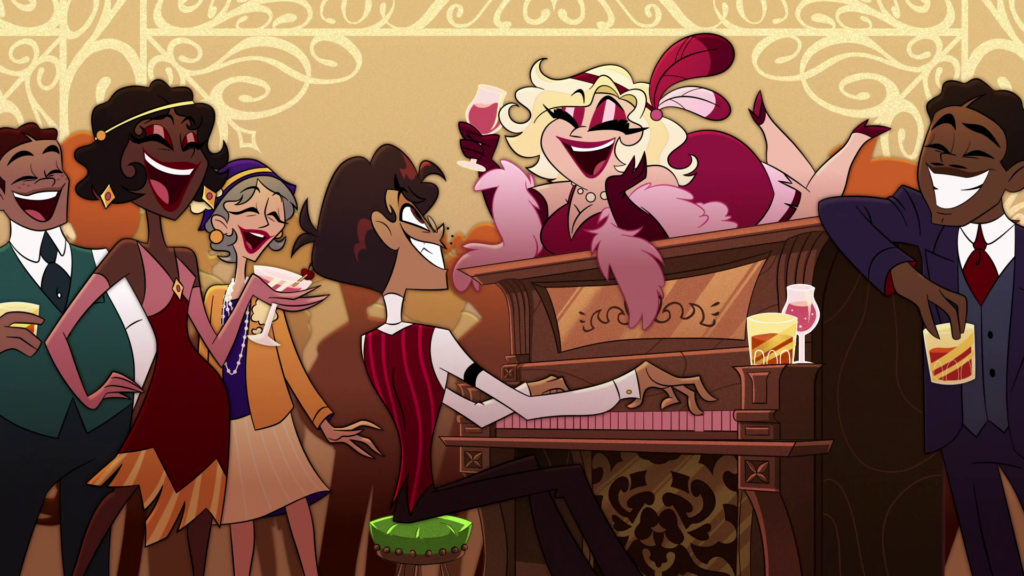
I don’t think Alastor’s defiance of some rules means he completely rejects the concept of structure itself; he really does value manners, hospitality, bargains and clearly delineated roles (such as “Host of the Hotel”). What gets his hackles up are rules imposed without clear meaning or for stupid reasons. He’s attracted to communities that make their own rules and let him choose where he stands in relation to them. I think this is probably because he thinks he’s the one true arbiter of which rules are stupid and which aren’t.
This natural pattern definitely continues at the hotel, which is yet another outsider community, this time built around the idea of redemption, one that is completely dismissed by both Heaven and Hell. Alastor might not have chosen to be involved in the first place if his Deal with Rosie required him to help, although his apparent interest in the hotel predates his arrival there (he seems to have been the one who saw it on the news).
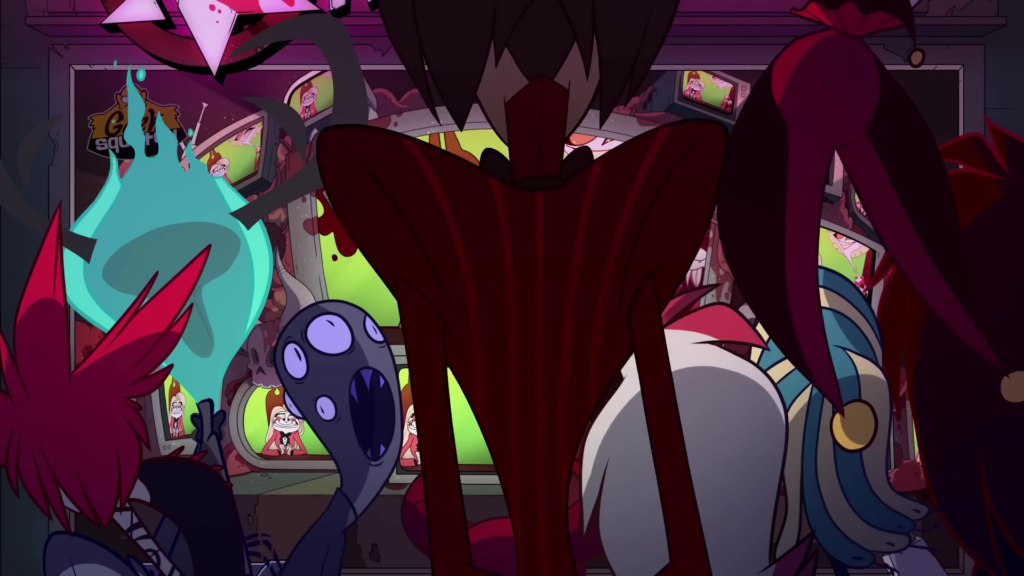
Whatever brought him there, his investment increasingly appears to extend beyond the demands of any simple assignment. It’s not that in Hazbin, Alastor doesn’t have a community; it’s that he doesn’t want to admit how much a place he would choose to belong to matters to him.
Hell itself is also a realm of outsiders, and Alastor identifies with it far more readily than with Earth or Heaven. The hotel, however, is an outsider community even within Hell: a group organised around a possibility that both realms have rejected out of hand. Even if he’s sent there initially under Rosie’s orders, Alastor returns later and once again self-selects himself into the most outsider group possible.
Alastor’s concept of “fun” is also oddly important to this pattern. Fun for him means more than just entertainment. He treats things with an immature irreverence, but for him, fun primarily refers to places, people and actions beyond simple (boring) rules. His pursuit of fun lets him dodge confronting things in a sincere emotional way while still allowing him to remain openly defiant of the establishment.
Lucifer is composed primarily of pride, and it’s the source of his absolute isolation. He appears naturally disinclined to form new friendships, still clinging stubbornly to his wife and daughter. This dependent approach served him well enough while his relationships were stable, but as they began to break down, he was left completely isolated and in a spiral of self-blame and fear. He doesn’t seem to possess the tools to venture back out into the world, having told himself that fundamentally all sinners are inferior, unsalvageable creatures who can’t understand him or relate to him.
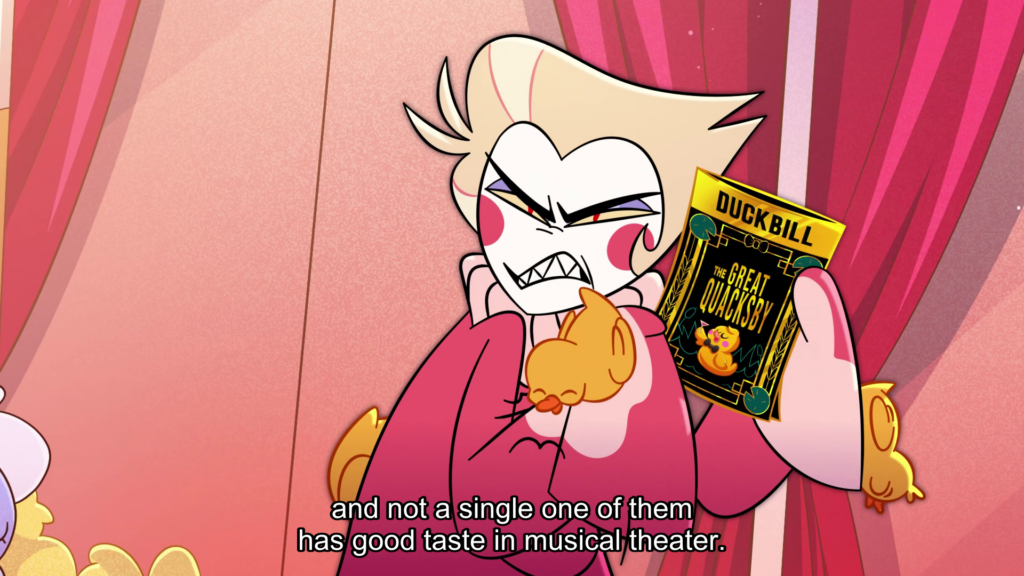
He even disparages their creative tastes when he complains about their lack of interest in musical theatre, which, for an angel of creativity, seems to be the most condemnation he can level at anyone. His origins leave him burdened by the flawed belief that he can only really relate to or associate with people of a similar social standing to his own. He’ll speak with Vaggi, but I’d say this is because he sees himself and Lilith in her relationship with Charlie and because she has a shared history as a fallen angel.
Outside of this he can barely even pretend to care enough to know the hotel inhabitants names.
The Recluse and the Showman
Alastor and Lucifer isolate themselves in basically opposite ways. Alastor puts himself within communities but denies belonging to them. Lucifer invests almost entirely in a tiny family unit and pulls away from the wider commmunity when those relationships fracture.
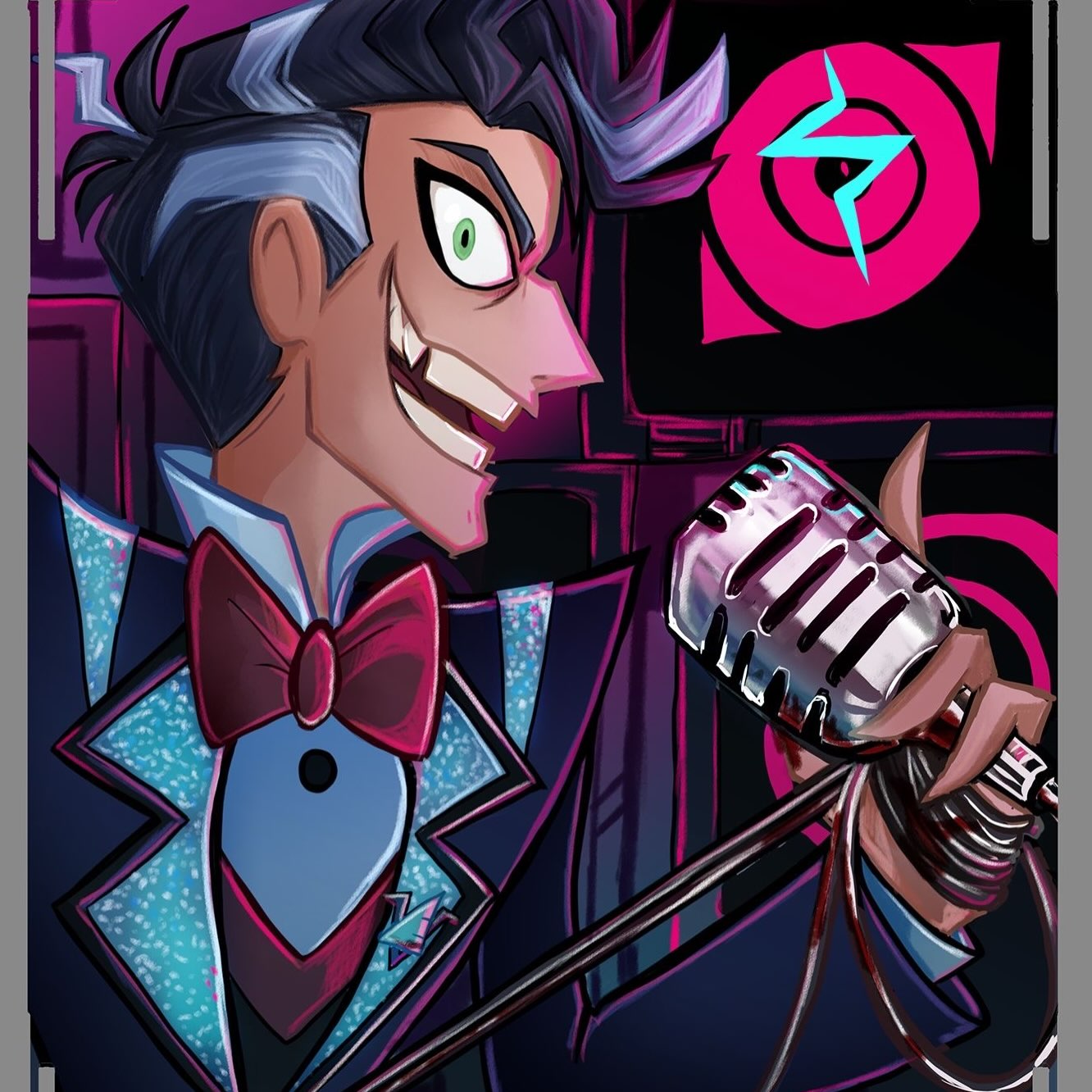
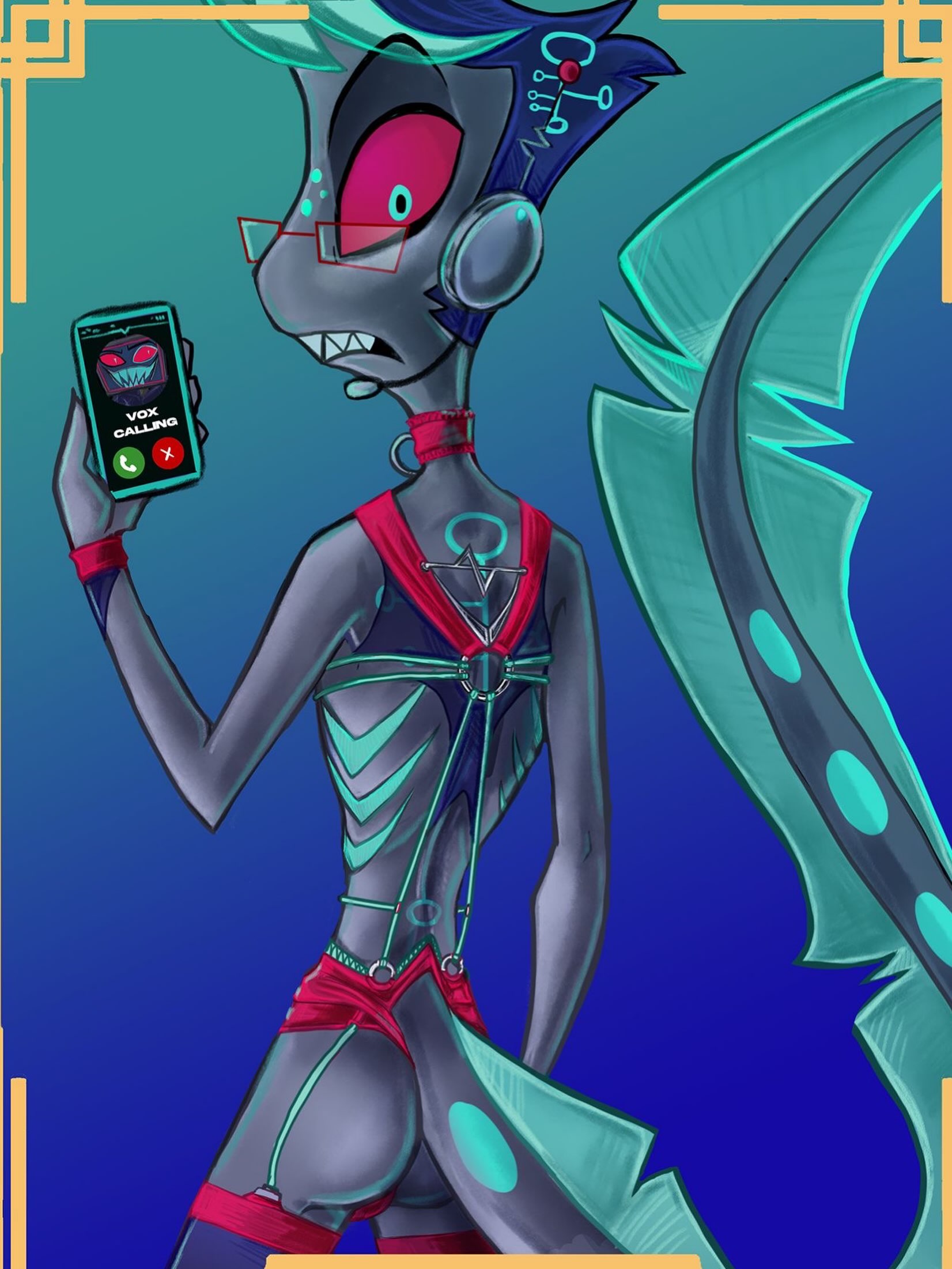
Their respective withdrawals become almost inverted when Alastor’s history with Vox is laid out alongside Lucifer’s family breakdown. Lucifer retreats from everything after the family unit he solely leaned on broke down. Alastor retreats from Vox when Vox attempts to make their relationship official. Vox’s offer clearly involved partnership, interdependence, and possibly even a form of family, and it hit exactly the point where Alastor’s preferred ambiguity would become impossible to maintain.
Alastor is comfortable being part of a community where he can choose the role he plays and deny that the community has any claim on him at all. He likes to be a host or an entertainer, even a guard; he just won’t admit he needs anyone else in return. People perform their own roles apart from him, just co-workers. Vox, however, appears to have wanted the relationship itself acknowledged. I think it wasn’t the connection between them, which was mutual and strong, that threatened Alastor, but the very expectation that he admit it was real and allow it to influence his choices going forward.
Lucifer isolates himself because he lost the people he allowed himself to need, while Alastor isolates himself to PREVENT anyone from becoming someone he openly needs. Lucifer withdraws after his safe sense of belonging collapses. Alastor withdraws when that sense of belonging becomes real enough to be capable of hurting him.
Most of Alastor’s relationships are strictly transactional; he’s used to people valuing what he can provide them without actually valuing him as a person in return. His producers benefitted from his talent while resenting and harbouring disdain for him, and Mimzy exploits their history when she needs protection. Husk and Niffty are consistently present in his life, but Husk’s continued service is secured through a Deal he can’t actually leave. I feel like Husk could even be an ally to Alastor if he let him; he seems to respect him and admire his powers
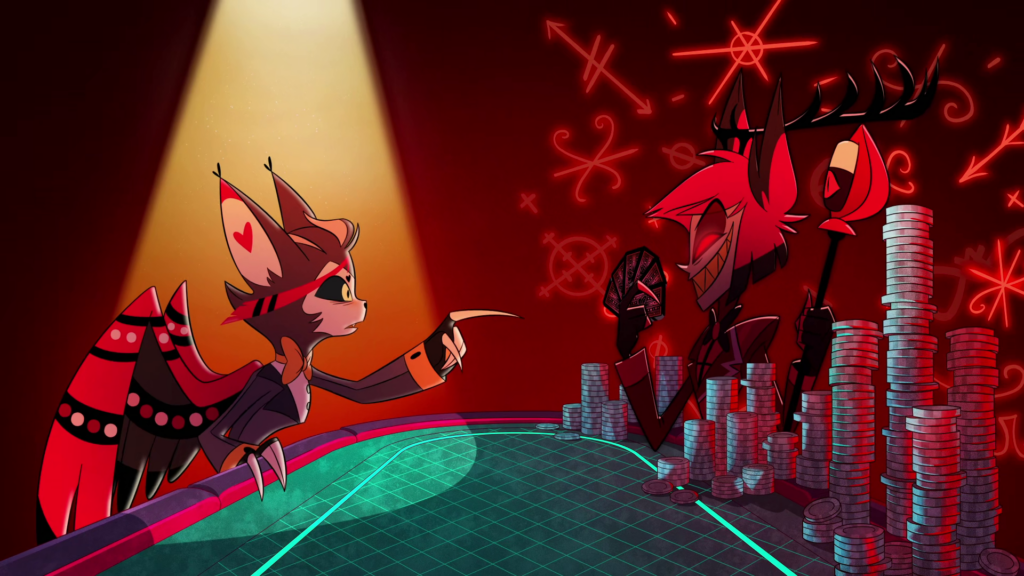
But Alastor won’t allow the possibility of rejection to even exist between himself and Husk. He’s in charge, and Husk will do as he says.
This need for transactional relationships might also explain why Alastor himself prefers roles that make him indispensable. If he’s in a role, he always has a very practical reason why people stay close to him. He doesn’t need to ask or question whether they would stay if he were no longer useful. Binding others through deals might even appear more honest than relying on affection; a contract admits that the relationship contains obligation, which Alastor seems to consider honest. Friendship, on the other hand, can be a mire of hidden resentment, entitlement, and exploitation beneath what looks, on the surface, like genuine concern.
Vox in this regard is a really difficult situation because his attachment to Alastor was sincere while still carrying expectations of Al. A formal partnership would have been a statement of Alastor’s importance, but it also would have given Vox a recognised claim on Alastor’s time, loyalty and public identity. Alastor might have found what he deemed obvious opportunism easier to tolerate than genuine affection once that affection started demanding things of him. Being useful is a position he understands. Being mutually needed is a lot more dangerous.
This, in my opinion, is also why Alastor seems fine to be around Vox again once he’s under a deal, because once again he has that excuse of a transactional relationship. No one can question why he’s there, because he can simply say he has a plan and that he has to be there.
Lucifer complicates this pattern because he has very little practical need to exploit Alastor. He doesn’t actually need anything from Alastor, yet he seems to find him interesting. If that interest persists independently of Charlie and the hotel, Alastor will be left with fewer ways to explain it away as utility. Friendship with Lucifer would therefore require him to confront the possibility that another person might actually choose him without Alastor being able to dismiss it as ulterior. Lucifer wants nothing from him other than perhaps antagonism.
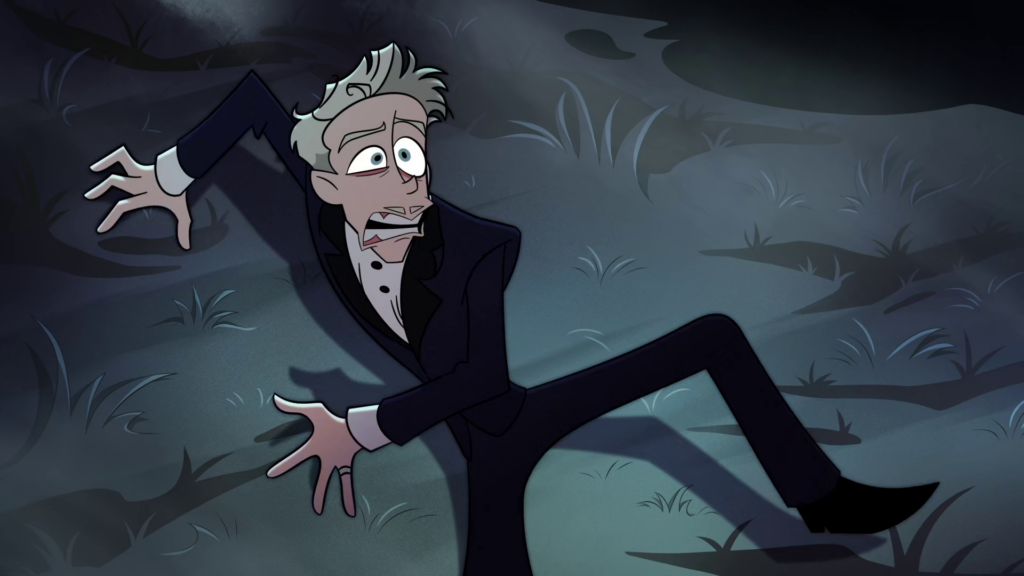
This isn’t a straightforward path; however, we have already seen that Alastor has met people in the past who want nothing from him for darker reasons. His primary target was rude, dismissive individuals in positions of power; the desire to classify Lucifer in this most-hated category must be strong in Alastor. Any progress between the two would also rely on Alastor being surprised by Lucifer in some way and witnessing something that would move him out of the category of someone in charge and out of the hierarchy he’s in. Lucifer has nothing to gain from Alastor, but after seeing the laser Vox made, Alastor has everything to gain from Lucifer if he can snare him in a deal. This is still a power imbalance.
Alastor and Lucifer are also opposites in how they deal with theatricality. Lucifer knows he’s attractive and wears his pride openly, performing as part of the influence he exerts over Hell. He seems to see the performances as a burden and not something he actually enjoys. He does it to try and help Charlie and regrets it bitterly. He’s not a magically weak person, capable of staggering acts of flashy magical intimidation and feats of creation. He can’t kill a Sinner, but he can remove people with portals, destroy their homes, shatter their entire district if he wanted to. He’s basically unkillable. Lucifer is not weak; the viewer simply sees him at his private, weakest moments, undermined by his own emotions. He performs to keep people at a distance because he has decided there is no one left whom he can truly reach out to who isn’t his immediate family.

Alastor, on the other hand, performs so that people will recognise him and respect and fear his name. He relies on his voice and reputation to give himself the freedom to live his life as he wants. He exults in the power and the freedom he wields in Hell, even while technically under the control of Rosie’s deal. It seemed to work for him relatively well right up until the point she made him leave, and his reputation decayed into disrespect and indifference. This seems to be the final straw for him. I think he’s a contrast to Lucifer in the fact he genuinely does seem to revel in fame and power, so long as those things are curated exactly how he wants them to be. Lucifer finds that curated self insincere and seems mildly disgusted by it at times.
It’s also worth mentioning before I close that Alastor does fundamentally share the traits that drew Lucifer to Lilith in the first place; he is also someone who found himself in a strict role under stupid rules and decided that, rather than engage with it, he would split. He went to Hell and ended up more or less in charge of it. This kind of rejection was exactly Lilith’s game plan in paradise, and when Hell was subject to overcrowding and dismissal, she sought to have them rise up. Alastor appears to have been involved in some way, since he disappeared for seven years too. Was Lilith yet another outsider cause and small community that he ended up part of?
Either way I think there are very compelling depths to explore between Alastor and Lucifer and I can’t wait to see if season 3, 4 and 5 digs into them as we go along.
Conclusion
I think fundamentally that Alastor and Lucifer are interesting foils for one another because they both tried to survive rejection, either cosmic, societal or otherwise, and it changed them in ways that the other is perhaps uniquely equipped to call out and challenge. Lucifer had something precious but collapsed when he lost it, while Alastor has never really had any secure sense of belonging in his lifetime; everything was fragile, found communities, and if he lost his mother traumatically, as people speculate, even family presented no stability or true safety. He’s had to build a life without the possibility of close bonds, finding other ways to relate to people. Lucifer, on the other hand, has never built anything by way of a community outside what he had.
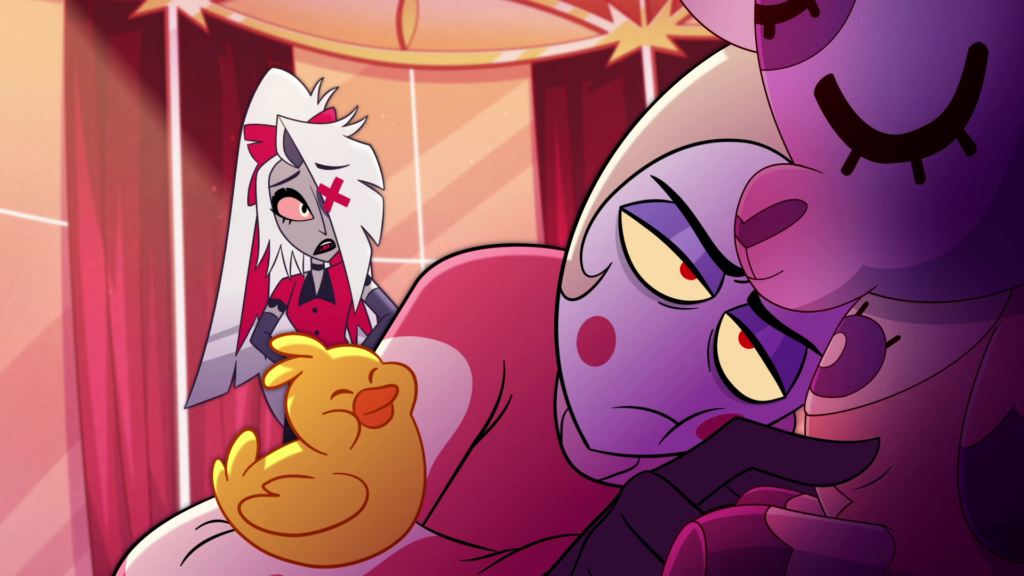
There’s every possibility that when they look at one another they see something contemptable and yet painfully familiar. It is perhaps why they antagonise one another so much. Alastor sees a guy with almost unlimited power, who is unquestionably at the top of almost every fathomable heirarchy who has allowed a significant rejection make him passive, remote and selfish. Lucifer sees a man who has turned pride and theatricality into a complete shield against sincerity and vulnerability. Alastor is a liar and he wears that on his sleeve, and yet because he performs charm, people fall for it again and again. Lucifer can hardly bring himself to perform normal social functions.
And yet, despite all of that, Alastor possesses numerous qualities that Lucifer once possessed and which drew him to Lilith. Defiance, ambition and an absolute unwavering refusal to accept the place assigned to him. Lucifer in his turn possesses the possibility of Alastor confronting his own need to dismiss people out of hand as wanting to exploit him. Lucifer looks and quacks like Alastor’s target prey, yet unlike the people he killed in life, genuinely appears to love his family and has assigned Sinners the blame his pride won’t allow him to assign to himself.
This is what ultimately makes them more than comic rivals. Their conflict is an argument between two different ways of surviving the same kind of thematic injury. One risked belonging and retreated after it failed; the other keeps choosing belonging while refusing that it is belonging at all and running away before it can become serious. Whether the two become friends, enemies, or something else has yet to be seen; I think it’s hard to deny that they have a truly fascinating potential to piss one another right the fuck off in ways that might drag everything into the light.